Real Estate Tip # 10 – When to Use a Quitclaim Deed?

A quitclaim deed is a document that is used to transfer ownership of real property from one party to another. Quitclaim deeds are also sometimes called quit claim deeds or quick claim deeds because they are a fast way to accomplish real estate transfers.
Transferring Title with a Deed

There are several ways to transfer real estate title. A warranty real estate deed transfer is the most common type of deed used when properly is sold to a third party in a typical real estate transaction.

A warranty deed promises that the person transferring the property has good title to it and the right to sell it. It includes protections for the buyer, such as compensation if there is anyone else who holds superior title to the property. This type of deed promises that there are no liens on the property such as a mortgage, tax lien, or creditor’s liens.

When a warranty deed is executed, a title search (a check of past deeds and liens for the property) is conducted to verify the seller has good title. Title insurance is usually purchased as part of the sale to protect the new owner if there is a problem. Warranty deeds are always filed with the county after they are executed.

Mortgage Rates Hit Record Lows for Three Consecutive Weeks.

First Time Home Buyers, For Buyers, Interest Rates, Move-Up Buyers

Mortgage Rates Hit Record Lows for Three Consecutive Weeks | Keeping Current Matters

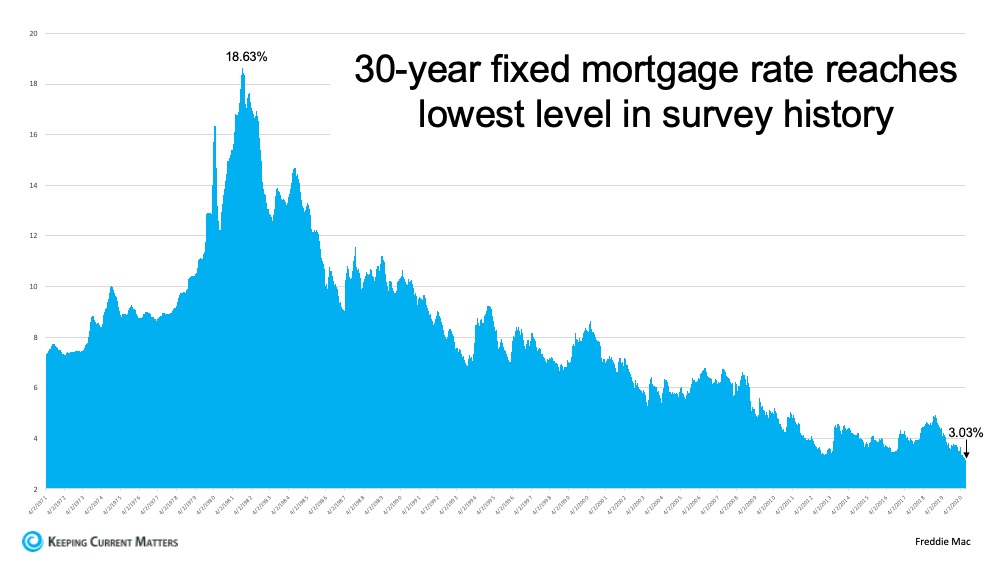
Over the past several weeks, Freddie Mac has reported the average 30-year fixed mortgage rate dropping to record lows, all the way down to 3.03%. Last week’s reported rate reached the lowest point in the history of the survey, which dates back to 1971 (See graph below):

The Benefits of Homeownership May Reach Further than You Think

More than ever, our homes have become an integral part of our lives. Today they are much more than the houses we live in. They’re evolving into our workplaces, schools for our children, and safe havens that provide shelter, stability, and protection for our families through the evolving health crisis. Today, 65.3% of Americans are able to call their homes their own, a rate that has risen to its highest point in 8 years.

June is National Homeownership Month, and it’s a great time to reflect on the benefits of owning your own home. Below are some highlights and quotes recently shared by the National Association of Realtors (NAR). From non-financial to financial, and even including how owning a home benefits your local economy, these items may give you reason to think homeownership stretches well beyond a sound dollars and cents investment alone.

Recession? Yes. Housing Crash? No

With over 90% of Americans now under a shelter-in-place order, many experts are warning that the American economy is heading toward a recession, if it’s not in one already. What does that mean to the residential real estate market?

What is a recession?

According to the National Bureau of Economic Research:

“A recession is a significant decline in economic activity spread across the economy, lasting more than a few months, normally visible in real GDP, real income, employment, industrial production, and wholesale-retail sales.”

COVID-19 hit the pause button on the American economy in the middle of March. Goldman Sachs, JP Morgan, and Morgan Stanley are all calling for a deep dive in the economy in the second quarter of this year. Though we may not yet be in a recession by the technical definition of the word today, most believe history will show we were in one from April to June.

Real Estate Tip #9 – Three Reasons Why Pre-Approval Is the First Step in the 2020 Homebuying Journey

When the number of buyers in the housing market outnumbers the number of homes for sale, it’s called a “seller’s market.” The advantage tips toward the seller as low inventory heats up the competition among those searching for a place to call their own. This can create multiple offer scenarios and bidding wars, making it tough for buyers to land their dream homes – unless they stand out from the crowd. Here are three reasons why pre-approval should be your first step in the homebuying process.

1. Gain a Competitive Advantage

Low inventory, like we have today, means homebuyers need every advantage they can get to make a strong impression and close the deal. One of the best ways to get one step ahead of other buyers is to get pre-approved for a mortgage before you make an offer. For one, it shows the sellers you’re serious about buying a home, which is always a plus in your corner.

Great News for Renters Who Want to Buy a Home

  • Rents in the United States have been skyrocketing since 2012. This has caused many renters to face a tremendous burden when juggling their housing expenses and the desire to save for a down payment at the same time. The recent stabilization of rental prices provides a great opportunity for renters to save more of their current income to put toward the purchase of a home.

Just last week the Joint Center of Housing Studies of Harvard University released the America’s Rental Housing 2020 Report. The results explain the financial challenges renters are experiencing today,

Make the Dream of Homeownership a Reality in 2020

In 1963, Martin Luther King, Jr. led and inspired a powerful movement with his famous “I Have a Dream” speech. Through his passion and determination, he sparked interest, ambition, and courage in his audience. Today, reflecting on his message encourages many of us to think about our own dreams, goals, beliefs, and aspirations. For many Americans, one of those common goals is owning a home: a piece of land, a roof over our heads, and a place where our families can grow and flourish.

Realty Estate Tip #8: Buying a Home Early Can Significantly Increase Future Wealth

According to an Urban Institute study, homeowners who purchase a house before age 35 are better prepared for retirement at age 60.

The good news is, our younger generations are strong believers in homeownership.

Housing Inventory Vanishing: What is the impact on you?

The real estate market is expected to do very well this year as mortgage rates remain at historic lows. One challenge to the housing industry is the lack of homes available for sale. Last week, move.com released a report showing that 2020 is beginning with the lowest available housing inventory in two years. The report explains: